Lee, Dr. Sungyoon
Literacy Processes and Instruction Lab
About the Lab
Welcome to the MTSU Literacy Processes and Instruction Lab, housed in the College of Education. Our lab conducts theory-driven research on how people read, think, and learn across disciplinary contexts, with particular attention to the cognitive and instructional processes that give rise to deep comprehension and learning.
Our research engages foundational questions in disciplinary literacy, learning sciences, and educational psychology, including how readers construct meaning from complex texts, how prior knowledge, task demands, and goals shape comprehension processes, and how learners coordinate multiple sources of information in multimodal and digital environments. We conceptualize reading not merely as an outcome, but as a dynamic, goal-directed, and context-sensitive process that unfolds during instruction.
A central aim of the lab is to articulate and test theoretical accounts of reading and comprehension processes, such as comprehension monitoring, inference generation, and strategic processing, and to examine how these processes vary across texts, tasks, and learners.
Our work bridges theoretical inquiry and instructional design by using process-level evidence to inform the design and evaluation of evidence-based instructional interventions, particularly in disciplinary literacy contexts such as social studies and science. Through this integration of theory, method, and intervention, the lab aims to advance both explanatory models of reading and practical approaches to improving reading and learning outcomes for diverse learners. The lab also provides hands-on research experiences for undergraduate and graduate students, supporting their development as scholars in literacy, learning, and educational research.
1. Research mission
- Producing novel and high-quality research publications in the areas of reading and learning.
- Utilizing state-of-the-art neuroscientific and psychophysiological measurement technology such as Eye tracking.
- Stimulating interdisciplinary collaborations with faculty and students from different colleges.
2. Educational mission
- Inform educators, clinicians, and researchers of the strengths and weaknesses of eye tracking measures.
- Providing learning opportunities for existing and prospective students at MTSU.
3. Community outreach mission
- Translating outcomes of research into real world applications in collaboration with local schools.
- Developing science-based intervention
- Optimizing learning conditions through teaching and technology
Research Focus and Current Projects
ACDC (Activating/Constructing Disciplinary Content Knowledge)
Our study shows that two simple pre-reading strategies—mobilizing prior knowledge and previewing text structure—can meaningfully improve how students read challenging informational texts. When students briefly activated what they already knew about the topic, their reading became more fluent: their eyes moved more smoothly across the text, they spent less time struggling with key terms or concepts, and they reread less frequently. Even a quick brainstorm, discussion, or prompt before reading helped students process information with greater ease and confidence.
Previewing how the text is organized had a different but equally valuable impact. When students were shown the structure of the passage—such as how ideas would be connected or sequenced—they followed the author’s reasoning more effectively. Their eye-movement patterns showed smoother transitions between sections and a clearer understanding of how ideas related to one another across the entire passage. Together, these findings suggest that small, easy-to-implement pre-reading routines can significantly strengthen students’ comprehension of complex texts, offering practical benefits for both teaching and learning.
SUMMER (Strategy Use in Multimodal Media Engagement and Reading)
Welcome to SUMMER, a research initiative dedicated to understanding how students read, process, and learn from today’s complex multimodal texts. As digital environments increasingly blend written language with images, videos, animations, audio, and interactive features, students must coordinate multiple sources of information in ways that traditional reading does not require. SUMMER examines these evolving literacy demands and identifies the strategies that support successful comprehension in digital, multimodal spaces.
Our research combines eye-tracking technology, think-aloud protocols, and performance assessments to capture students’ real-time reading behaviors. By integrating behavioral and process-level data, SUMMER investigates how readers allocate attention, navigate multimodal layouts, and apply strategies to construct meaning across text and media.
The goal of SUMMER is to generate evidence-based insights that help educators design instruction aligned with the realities of modern reading. Through this work, we aim to strengthen students’ engagement, comprehension, and strategic flexibility as they interact with multimodal texts across academic subjects.
Lab Members
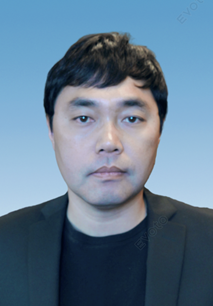 | Dr. Sungyoon Lee PI, Associate Professor Sungyoon.Lee@mtsu.edu Associate Professor of the Department of Elementary and Special Education and Literacy Studies Ph.D. program at Middle Tennessee State University (MTSU). His expertise includes reading comprehension strategy instruction, educational technology, and intervention development for secondary-level learners. He has conducted experimental studies and meta-analyses on cognitive and linguistic factors influencing comprehension and has extensive experience teaching secondary-level students and providing professional development for educators. |
 | Dr. Angelica DaSilva gad2y@mtmail.mtsu.edu Angelica DaSilva’s work lies at the intersection of multilingual literacy and educational technology. She investigates how children and adolescents develop as readers across languages and digital spaces, with a focus on motivation, identity, and strengthening the quality of literacy EdTech tools. |
 | Maria del Mar Cuadron Roldan Ph.D. Student mc2aq@mtmail.mtsu.edu Spanish lecturer at the University of Kansas. She earned a Master’s degree in Curriculum and Teaching and is currently a PhD student at Middle Tennessee State University. Her academic interests focus on vocabulary development in second language acquisition, with particular attention to instructional approaches that support effective vocabulary learning in foreign language contexts. |
 | Lauren MacDonell Ph.D. Student lmm9m@mtmail.mtsu.edu Lauren MacDonell, M.Ed is a researcher, instructional design consultant, and teacher educator specializing in inclusive language and literacy learning. She holds a Master of Education in Instructional Design and a B.A. in Linguistics, and she is currently a graduate research assistant and doctoral student in Literacy Studies at Middle Tennessee State University. She also serves as an instructor in College Unbound’s Teacher Education Program. |
 | Sarah Champeau Ph.D. Student sc2cn@mtmail.mtsu.edu Sarah Champeau, M.S., is an elementary reading specialist with experience in teacher training and instructional coaching. She earned a master’s degree in Literacy Leadership and Instruction, and is currently a graduate assistant and Ph.D. student in Literacy Studies at Middle Tennessee State University. Sarah’s current research interests include vocabulary acquisition and morphology instruction, teacher training, and interventions for early learners. |
 | Lauren Spenceley Ph.D. Student ls2au@mtmail.mtsu.edu Lauren Spenceley, M.Ed., is a Ph.D. student in Literacy Studies at Middle Tennessee State University and serves as the Secondary English Language Arts Specialist at the Arizona Department of Education. Lauren’s mission is to empower educators through structured and disciplinary literacy, advocating for older students’ reading needs, and fostering a love of literacy through evidence-based best practices and thoughtful leadership. |
Funding
MTSU MT-IGO (FRCAC): $10,000
- PI: Sungyoon Lee
- Support purchasing lab equipment such as Varjo Aero virtual reality headset
MTSU Technology Access Fee Grant: $73,300
- Support purchasing lab equipment such as Tobii Spectrum and Tobii Glasses 3
Contact
Lab location
- COE 372 College of Education Building, MTSU, Murfreesboro, TN
- General Inquiry
- For general inquiry, contact the Lab Director, Dr. Sungyoon Lee at Sungyoon.Lee@mtsu.edu
Facilities
Eye Tracker
- Tobii Spectrum (post with pictures)
- Tobii Spectrum is a screen-based remote eye tracker that captures eye movement more than every millisecond (1,200Hz). Tobii Spectrum and Tobii Pro Lab software allow researchers to present a variety of stimuli and extract various types of eye movement measures.
- Tobii Glasses 3 (post with pictures)
- Tobii Glasses 3 is a wearable eye tracker that captures eye movement with a 100Hz sampling rate. The device is used for recording eye movements when the participants are in an action or conducting a performance.
VR Headset
- Varjo Aero (post with picture)
- Varjo Aero is a virtual reality headset with a built-in eye tracker.
Current Publications
Lee, S., Williams, M., Rice, M., & Wijekumar, K. (Accepted). A meta-analysis of social studies interventions on secondary students’ learning
Guo, D., Lee, S., & Chen, H. (Under Review). Effect of augmented reality applications on elementary students’ learning in science: A meta-analysis
Lee, S., Hwang, H., Shin, Y., & Kendeou, P. (2025). Teaching presence, social presence, and digital literacy in predicting online learning experience in elementary students. British Journal of Educational Technology.
Lee, S. (2023). The role of spatial ability and attention shifting in reading of illustrated scientific texts: An eye tracking study. Reading Psychology, 1-21.
Lee, S., Woltering, S., Prickett, C., Linda, H., Shi, Q., & Thompson, J. (2022). Exploring the associations between reading skills and eye movements in elementary children’s silent sentence reading. Reading Psychology, 42(1), 85-103.